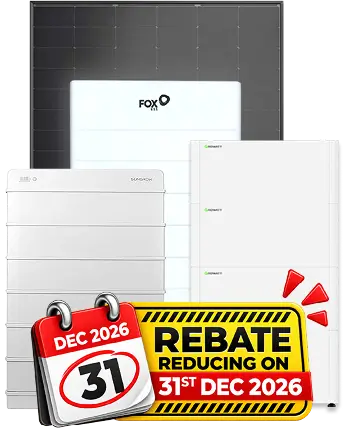
BESS4 is the NSW Peak Demand Reduction Scheme activity supporting eligible battery installations at small and medium business premises.

NSW BESS4 Commercial Battery Incentive
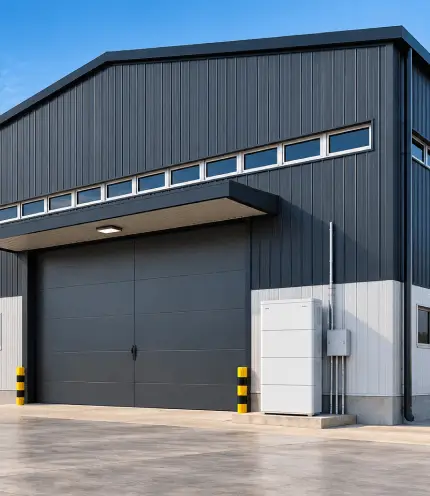
BESS4 Commercial Battery Incentives in NSW
Commercial battery storage for eligible NSW businesses, assessed around your energy needs.
| BESS4 | Over 20 kWh | Up to 200 kWh | NSW Businesses | Site Assessment |
|---|---|---|---|---|
| Business battery incentive | Minimum usable capacity threshold | Maximum usable capacity | Eligible non-residential premises | Eligibility and system suitability |
Store available energy and use it when your business needs it most. Commercial batteries can help increase solar self-consumption, manage electricity costs and reduce peak grid demand when appropriately sized and configured.
Fortune Solar can assess your consumption, existing solar, electrical infrastructure and proposed installation to help you understand suitable battery options and potential BESS4 eligibility.
Build a Smarter Energy System with Fortune Solar
Practical commercial solar and battery advice, shaped around your business’s energy use, operating hours and investment priorities.

Advice Built Around Your Business
Start with your electricity consumption and site conditions to identify storage that serves a clear purpose.

Clear Installation Scope
Understand the proposed equipment, electrical work and commissioning requirements before making your decision.

Compatible Battery Solutions
Assess battery and inverter configurations suited to your premises, energy demand and existing solar infrastructure.

Transparent Project Costs
Review system pricing, potential incentives and your contribution in a proposal with clearly explained assumptions.
Have Questions? Talk to our commercial energy team
Commercial Battery System Options
Your business may benefit from adding storage to existing commercial solar or installing new generation alongside a battery. The appropriate configuration depends on how much energy you use, when you use it and the infrastructure already on site.
| Battery Added to Existing Solar | New Solar and Battery Installation |
|---|---|
| Review existing solar generation and exports | Assess generation and storage together |
| Check inverter and electrical compatibility | Select compatible solar, battery and inverter equipment |
| Size storage around useful surplus energy and demand | Balance solar output with operating hours and consumption |
| Assess battery installation incentive eligibility | Assess eligibility for the new-solar incentive configuration |
Installation costs depend on equipment, switchboard requirements, cabling, access and system design. Request a complete installed-system proposal to understand the project cost.
Why Consider Commercial Battery Storage?
Use More of Your Solar
Store available surplus generation for later business use. This can be useful where your premises export electricity during the day but continue buying power after solar production falls.
Manage Higher-Cost Periods
A battery can shift electricity use away from more expensive tariff periods. The opportunity depends on your electricity contract, charging strategy, system losses and daily consumption pattern.
Support Peak Demand Management
Where your tariff includes demand charges, a suitably designed battery may help limit peak grid imports. Battery power, controls and the timing of your largest loads all matter.
Plan Around Your Premises
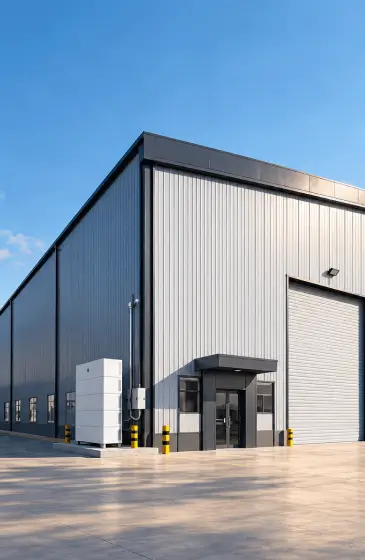
Choose equipment and placement that suit your available space, electrical supply and site conditions. Installation access, clearances and switchboard capacity should be considered early.
Prepare for Changing Energy Needs
New equipment, longer operating hours or future electrification may change your energy profile. Assess these plans during system design, with any future expansion subject to equipment compatibility and installation requirements.
Choosing the Right Commercial Battery for Your Business
A commercial battery should solve a specific energy problem. That may be using surplus solar after closing time, supporting evening trading or managing short periods of high electricity demand.
Start by understanding your electricity use throughout the day. A monthly bill shows total consumption, but interval data can reveal when your business draws the most power and whether those periods overlap with solar production.
Storage capacity and battery power also need to be considered separately. Capacity determines how much energy can be stored, while power determines how quickly that energy can be delivered. A large battery with insufficient discharge power may not support the loads you want to manage.
For businesses with existing solar, available surplus generation is another important factor. If most solar electricity is already used during the day, there may be less energy available to charge a battery. Additional solar could be worth assessing where the roof, electrical infrastructure and business case support it.
Fortune Solar can review these factors together to develop a proposal that explains the recommended configuration, installation scope and expected operating benefits. Potential incentives form part of that assessment, alongside the system’s practical value to your business.

What Battery Size Is Right for Your Business?
The right size depends on your consumption, solar exports, operating hours and the loads you want to support. Offices, hospitality venues, retailers and workshops can have very different storage needs, even when their total electricity bills look similar.
A Practical Battery Sizing Check
Review when your business imports electricity and how much surplus solar is available. Then compare the energy you want to shift with the battery power needed to serve those loads.
Fortune Solar can assess bills or interval data, solar production, inverter compatibility, phase supply, switchboard condition and available installation space. This helps identify useful storage capacity without assuming the largest system is the best investment.
Commercial Battery Assessment and Installation Process
- Energy and site assessment : Review consumption, operating hours, solar generation, electrical infrastructure and storage objectives.
- System proposal and eligibility checks : Define equipment, installation scope, pricing and potential incentives. Complete required scheme paperwork before installation begins.
- Approvals and installation : Obtain necessary approvals and arrange installation by appropriately qualified professionals using eligible equipment.
- Commissioning and handover : Test the system, configure monitoring and explain operating settings, documentation and support arrangements.

How BESS4 Incentives Work
BESS4 operates through the NSW Peak Demand Reduction Scheme. Accredited Certificate Providers create Peak Reduction Certificates for qualifying installations, helping fund a discount through participating installers. The agreed incentive should be identified in your quote. BESS4 requires a minimum customer payment of $5,000 per implementation; this is a contribution requirement, not an incentive amount.
BESS4 Eligibility and Equipment Requirements
BESS4 covers qualifying non-residential business installations with combined usable battery capacity greater than 20 kWh and no more than 200 kWh. Residential buildings and data centres are excluded.
Equipment must meet scheme requirements, including approved battery listing, relevant inverter and warranty conditions, and installation by an appropriately SAA-accredited installer. Required planning and network approvals must also be obtained.
Eligibility checks include grid connection and previous use of the business battery discount. Battery capacity alone does not establish eligibility.
Why Discuss Your Project with Fortune Solar?
- Assess storage against your actual business consumption and operating hours.
- Understand battery capacity, discharge power and installation requirements.
- Compare system costs, potential incentives and estimated benefits with clear assumptions.
BESS4 Commercial Battery FAQ's
-
What is BESS4?
-
Can a battery reduce my business electricity bill?
It may reduce grid imports or help manage tariff costs. Results depend on consumption timing, charging opportunities, electricity rates, system losses and installed cost.
-
Can it keep my business running during an outage?
Only a compatible system designed with backup capability can support agreed loads during an outage. Available power and runtime depend on equipment, stored charge and demand.
-
Can I add a battery to existing commercial solar?
Potentially. Your solar generation, inverter configuration, electrical supply and site infrastructure need to be assessed for compatibility.
-
Do I need solar to qualify for BESS4?
Battery-only installations may qualify. Eligible new or additional solar installed within 90 days of the battery can attract a larger discount, subject to sizing requirements.
-
What size battery qualifies?
Combined usable battery capacity must be greater than 20 kWh and up to 200 kWh, alongside the other eligibility requirements.
-
How much will installation cost?
Costs vary with battery quantity, inverter equipment, switchboard work, cabling, access and installation complexity. A site-specific quote should explain the equipment, incentive and total customer cost.
-
How do I access the incentive?
Work with a participating installer and complete the required nomination paperwork before installation. Eligibility and the proposed discount should be confirmed during quoting.
RECENT PROJECTS
All
SOLAR PANEL
BATTERY
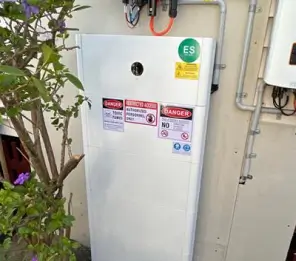
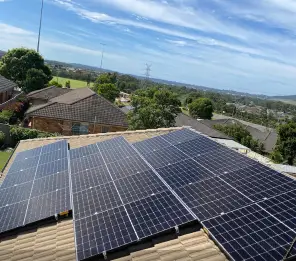
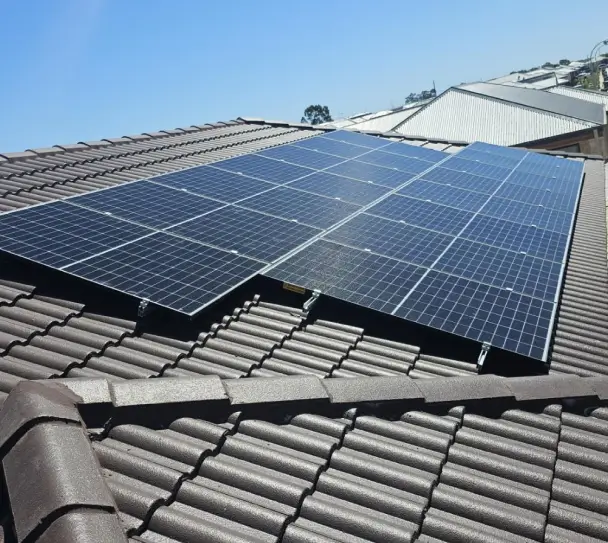
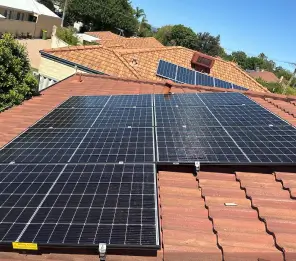
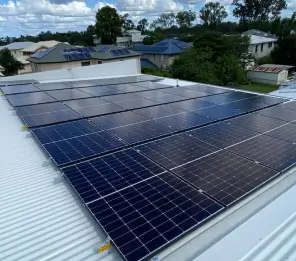


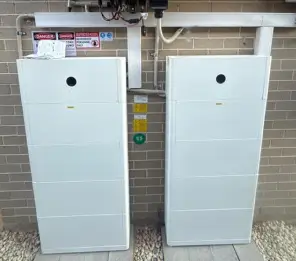
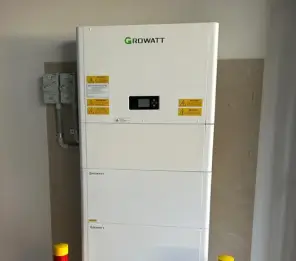
&TOP RATED INSTALLER NETCC APPROVED CUSTOMER SAYS EXCELLENT TOP RATED INSTALLER NETCC APPROVED CUSTOMER SAYS EXCELLENT TOP RATED INSTALLER NETCC APPROVED CUSTOMER SAYS EXCELLENT TOP RATED INSTALLER NETCC APPROVED CUSTOMER SAYS EXCELLENT CUSTOMER SAYS EXCELLENT NETCC APPROVED NETCC APPROVED CUSTOMER SAYS EXCELLENT NETCC APPROVED TOP RATED INSTALLER



What Our Customers Are Saying
Don't just trust our words, We have customers who experienced best solar panel installations across Australia!
M
Mark W.
(7 months ago)
Fortune Solar completed the installation of solar panels and batteries within 2 weeks of my accepting their quote. The pricing information in the company's quot....
C
Chelliah
(7 months ago)
My name is Chelliah Karunaharan, and Fortune Solar supplied and installed a Fox ESS CQ6 41.93 kWh Solar Battery System for us. Fortune Solar’s team was knowle....
A
Ajitpal
(7 months ago)
Ash from Fortune Solar helped us with the pricing and installation of our solar batteries and was a pleasure to work with. Their pricing was very competitive, a....
H
Hany Aly
(7 months ago)
Great experience with Fortune Solar. Very professional Team and best price around. Mr. Sean from sales & Alan from installation went above and beyond to get my ....
D
Doris Lee
(7 months ago)
Satisfied with customer service. Ash helped us on the process to have the solar battery installed, she is friendly, a good communicator, and patience on answeri....
B
Bhupendra Desai
(7 months ago)
Recently a friend of mine had got solar batteries installed by Fortune Solar Australia.
On his recommendation I called Fortune and spoke to Eric. He explained ....
A
Ashutosh
(7 months ago)
I found the Fortune Solar team to be very responsible, and Brinda’s customer-focused approach is exceptional. I have no hesitation in recommending Fortune Sol....
M
Masimba Mataruse
(7 months ago)
Had an awesome experience with Fortune Solar for my 42kWh battery system installation! Sean and Alan were top-notch - super professional, knowledgeable, and com....
A
Akshay S.
(5 year ago)
My experience with Fortune Solar has so far been really good. They were quite informative and explained me the benefits of going solar clearly. They also listen....
N
Nisarg
(5 year ago)
Initially I was a bit hesitant to give my solar installation to this company. But after few conversations with them and the product and price offered by them, I....
S
Satish
(5 year ago)
Booked my solar with Fortune Solar. Everything explained in details. They patiently answered all my questions. They were not pushy. No dramas, just waiting for ....
C
Correy
(5 year ago)
Marcus who was the first point of contact was efficient and helpful in providing details of what systems would match our roof space.... enthusiastic but not pus....
D
Deejay
(5 year ago)
Really happy with the service. We were kept uptodate through out the installation process. Louise and her team were great. System was up and running and wifi mo....
M
Miral R.
(5 year ago)
Kevin always kept me informed and quick turnaround. I would highly recommend Fortune solar for all your solar needs. I wouldn’t go elsewhere for my future sol....
A
Anil
(5 year ago)
Really happy with the service.
Installation was really quick and without any fuss. Customer service team was amazing and ask for feedback each stage. Overall s....
R
Ravi P.
(5 year ago)
Very affordable & Hassle Free installation process. Leo & Marcus helped from quote to Installation. The turnaround was within few days. Highly Recommended to ev....

Brands We Install
Harness Renewable Energy and Reduce Carbon Footprint
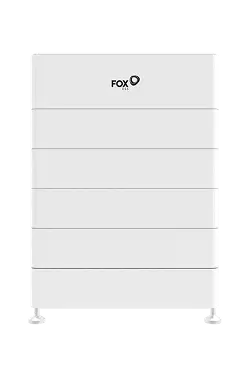
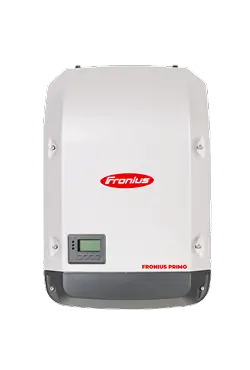
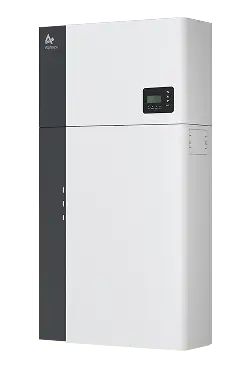
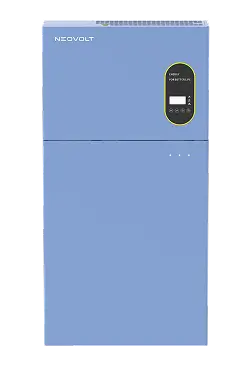















Power Up
Your Savings